Four-Cut Cell Technology: The Next Efficiency Code in the PV Industry
Table of Contents
Introduction
Over the past six months, one term has been popping up more and more often in PV circles: four-cut cells.
Tongwei, JinkoSolar, Trina, Chint... a wave of leading PV giants have collectively placed their bets. New product launches keep coming one after another, and module efficiency records are being broken again and again.
Some call it a "technological revolution," others say it is just a "natural extension of half-cut cells." What is the truth? Why are the big players betting on this technology together? Today let's break it all down.
The Principle: Why Cutting Cells Matters
Before talking about four-cut cells, there is a fundamental question worth spending two minutes on.
Many people think the purpose of cell-cutting is to "improve efficiency." Strictly speaking, that statement isn't quite accurate.
Cutting doesn't improve cell efficiency, it improves the module's packaged power.
Cell efficiency is the cell's own business. Whether you cut it or not, the efficiency of a single cell doesn't change. But once cut into smaller pieces, the current becomes smaller, and the resistive losses of that current on the busbars and ribbons go down. This saved energy ultimately shows up as an increase in module output power.
Joule's law, junior-high physics: loss = I²R. Halve the current, and the loss becomes one quarter.
The reason half-cut technology became widespread over the past five years comes down to this incredibly simple mathematical relationship.
Four-cut is an extension of the same logic: cut the current in half again, and the loss drops to one quarter again. Upgrading a module from half-cut to four-cut delivers a power gain of roughly 10-20W, corresponding to an efficiency improvement of 0.3-0.5 percentage points.
That may not sound like much. But in today's pricing environment, that 0.3 percentage point can be the difference between winning a bid or not.
Why Now? The Market Drivers
The technical principle of four-cut cells isn't new, people were discussing it at least five years ago. But true mass production only happened in the last six months.
Why?
Because demand-side conditions changed.
The first change is policy. On June 15th, China's Ministry of Industry and Information Technology released a grading and classification standard for PV modules, sorting them into four tiers by conversion efficiency, with the lowest tier set at 23.4%. Although nominally a recommended standard, state-owned enterprise procurement will most likely cite it directly. For module makers, this isn't a question of "whether to do it," it's a question of "do it or be eliminated."
Four-cut can be retrofitted on existing production lines, with short cycles, low investment, and fast results. This is the first driver of the four-cut boom: it is the fastest path to meeting the efficiency threshold on existing lines.
The second change is the competitive landscape. TOPCon technology is becoming increasingly homogenized, and the cell efficiency gap between players has narrowed to within 0.2 percentage points. In this situation, packaging optimization at the module end has become one of the few remaining places to create differentiation.
In other words, the room to squeeze water out at the cell end has nearly run dry, and it is now the module end's turn.
The Real Challenge: Edge Passivation and Yield
That said, four-cut isn't just a matter of slicing and you're done.
After a cell is cut into four pieces, the area of cutting-edge damage is twice that of half-cut technology. If left untreated, this damage causes severe carrier recombination, which actually lowers efficiency, the cut cell could end up worse than an uncut one.
So the core process difficulty of four-cut isn't the "cutting," but the edge passivation afterward.
There are several mainstream approaches today: Tongwei uses its self-developed TPE edge passivation technology, which according to public information performs well. Other leading players each have their own solutions, but few details are disclosed publicly.
Edge passivation sounds like one sentence, but doing it is a systems-engineering effort. The choice of passivation layer material, thickness control, uniformity, compatibility with subsequent packaging processes... every step requires repeated tuning. This is precisely why the companies able to mass-produce four-cut are still concentrated among the few leaders.
Another practical issue is yield. The finer the cut, the greater the fragmentation risk. A friend at a module factory told me that the fragmentation rate of four-cut is 2-3 percentage points higher than half-cut, which has a direct impact on cost.
The number of solder joints is also an issue. A four-cut module has twice the solder joints of a half-cut and four times that of a full cell. Every solder joint is a potential failure point. Whether it can withstand the long-term reliability test of a 25-year warranty period, frankly, there isn't enough real-world operating data yet to answer that question.
What the Leading Players Are Doing
What are the leading PV companies doing? Based on currently available public information:
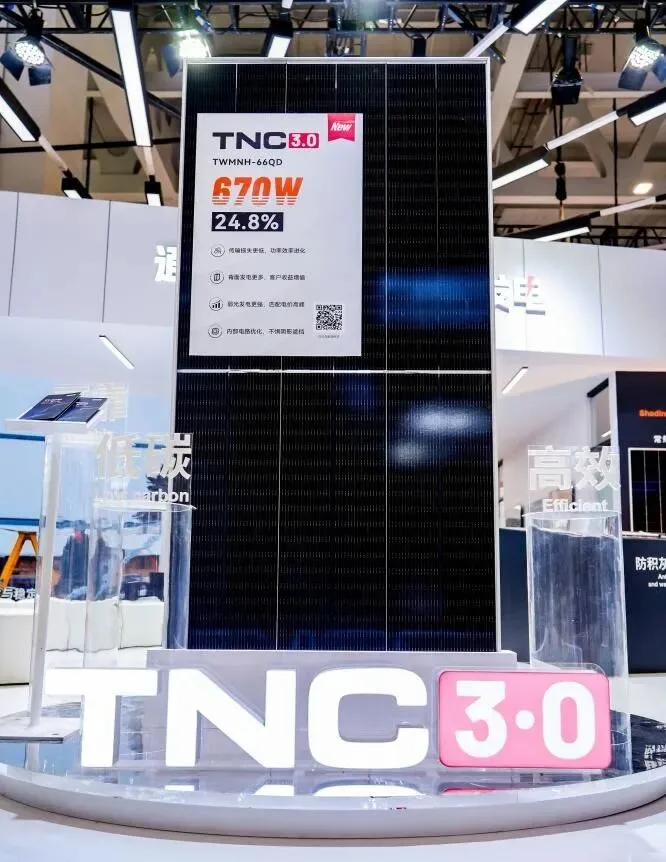
Tongwei is moving more aggressively. Its TNC 3.0 series adopts the four-cut approach, with maximum power reaching 770W and efficiency of 24.8%, placing it in the first tier among mass-produced modules. Edge passivation uses its self-developed TPE technology.
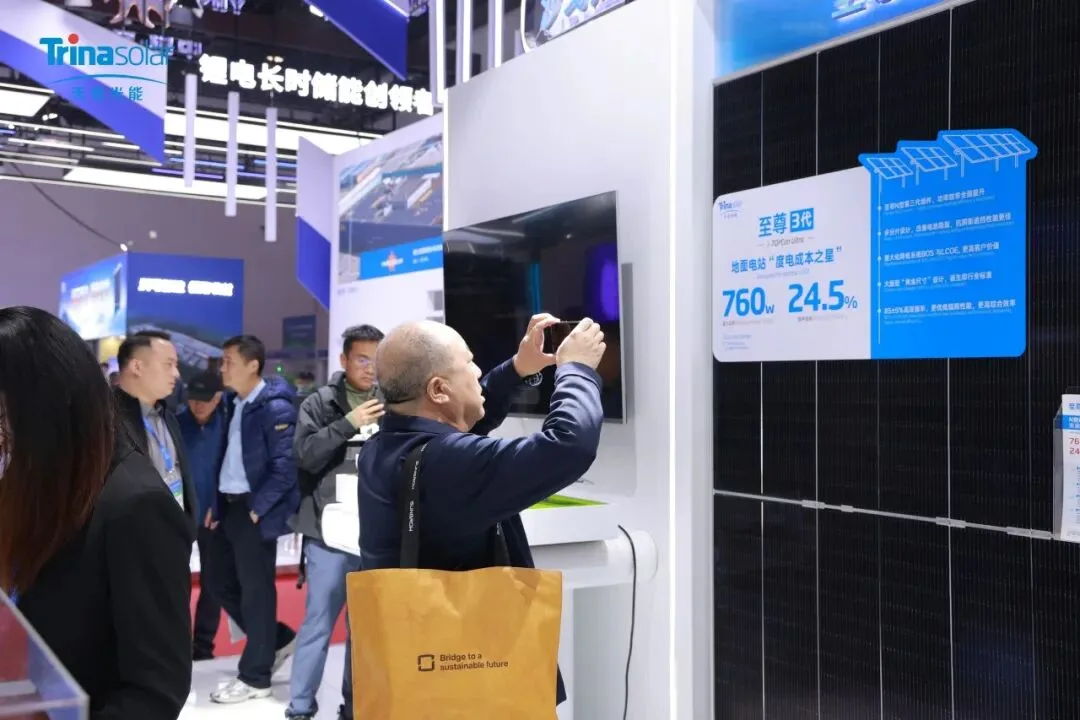
Trina Solar's Vertex 3rd generation also adopts four-cut, with power reaching the 760W level. Trina has long had deep accumulation in module packaging, and this time it has brought out its full arsenal.
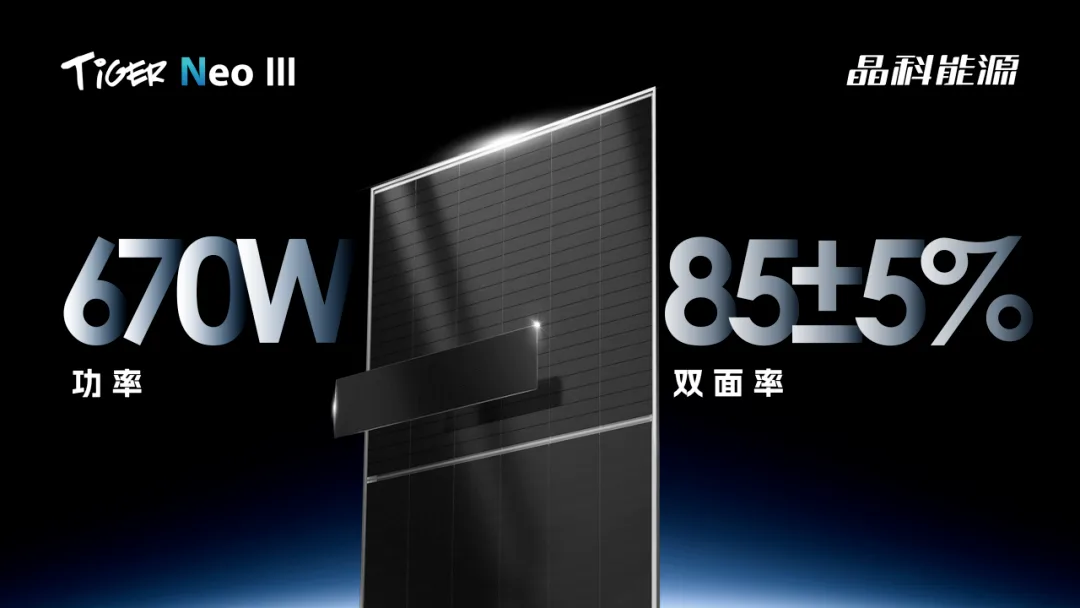
Jinko's Tiger Neo 3.0 likewise went with four-cut, at 670W. Jinko's strategy has always been steady, not chasing extreme parameters but valuing mass-production consistency.
LONGi's path is different. Instead of stacking four-cut on top of TOPCon, LONGi went straight for the BC route, using the inherent high efficiency of back-contact technology to solve the problem. BC modules reach 680W in mass production, with a 2026 shipment target exceeding 50GW. This is a different playbook, essentially betting on the generational advantage of a cell technology route.
Chint New Energy's ASTRON 7 Pro also adopts the four-cut approach, at 670W.
From these products you can see an interesting divergence: most companies choose to stack four-cut on existing TOPCon lines to "extend their life," while LONGi chooses to skip this step and bet directly on BC. Which strategy ultimately wins, it's too early to conclude.
Real Benefits for Power Plant Owners
For power plant investors and owners, four-cut modules offer two practical benefits.
First, better low-light performance. Four-cut modules have lower operating current, so in weak-light scenarios such as early mornings, evenings, cloudy days, and winter, the generation loss is smaller. Don't underestimate this difference, when converted into annual generation gains, the impact on return on investment is very real.
Second, stronger shading resistance. The internal circuit of a four-cut module is divided into finer strings, so when partially shaded (tree shadows, bird droppings, dust accumulation), the impact on the whole module's output is smaller. This is especially meaningful for distributed rooftop scenarios, where rooftop shading conditions tend to be complex.
Of course, the trade-off is a slightly higher module price. But considering the generation gains from improved efficiency, the levelized cost of electricity (LCOE) is most likely better.
Outlook: A Pragmatic Choice for the Current Window
Here are a few personal judgments, for reference.
In the short term, four-cut will become a standard move for the TOPCon camp. With the Ministry's efficiency grading standard in place, no upgrade means no bidding qualification, a hard constraint. It's expected that from the second half of 2026 through 2027, leading companies' TOPCon lines will largely complete the four-cut upgrade.
In the medium term, as processes mature and yields improve, the cost premium of four-cut will gradually narrow. By 2027-2028, the price gap between four-cut and non-four-cut modules may shrink to a negligible level. At that point it will shift from today's "premium option" to a "basic configuration."
In the long term, four-cut is most likely a transitional solution. Technology iteration in the PV industry never stops, and new cell structures or packaging methods may emerge that make the question of "how many cuts" irrelevant.
But that's a matter for later.
In this current window, four-cut is the most pragmatic choice. Investment is controllable, results are fast, it doesn't lock in a route, and it solves the problem at hand.
In today's environment where module prices have been driven below 1 yuan/W, the technology that can raise efficiency and win bids the fastest and most reliably is the good technology.
No disruption needed, no revolution needed.
Good enough, useful, and ready to use right now, that's enough.
Ooitech's View
Ooitech believes: Four-cut cell technology is currently the most pragmatic, low-cost, and fast-acting path for module makers to meet rising efficiency standards and stay competitive in the bidding game.